
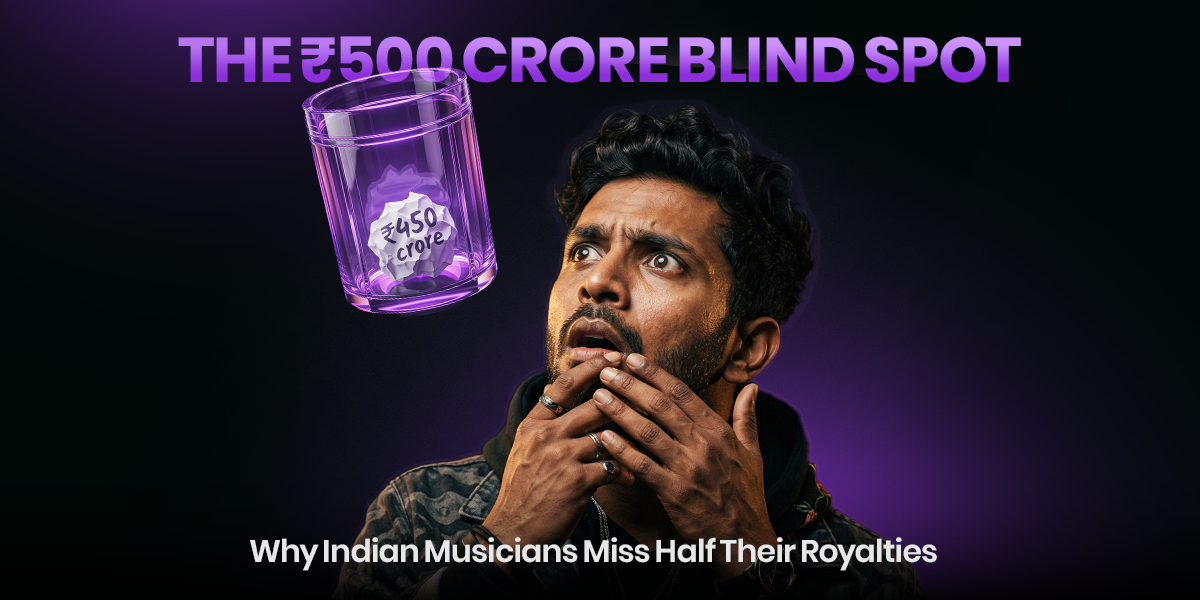
Every year, hundreds of crores in music royalties go unclaimed in India. According to FICCI-EY, nearly ₹420 crore was left uncollected last year. The reason? Most artists don’t fully understand the two types of royalties that exist in music:
1. Composition Royalties = “The Song”
This royalty belongs to the creators of the song itself the lyricists, composers, and publishers.
Where it comes from:
- Public performance – When your song is played on radio, at a live concert, or even in restaurants. Example: A Bollywood song played in a café generates royalties for the songwriter.
- Mechanical royalties (Streaming) – Every stream on platforms like Spotify or JioSaavn pays ₹0.06–₹0.10 in India to the songwriters.
- Sync fees – When a song is used in ads, films, or OTT shows. Example: Kesariya from Brahmāstra reportedly earned ₹2.5 crore from sync licensing.
How to claim: Register with IPRS (Indian Performing Right Society). If you’re independent, also work with a publishing admin to make sure you collect globally. Click here to understand Publishing Rights.
2. Sound Recording Royalties = “The Master”
This royalty belongs to the recording owner usually the labels, producers, and singers.
Where it comes from:
- Streaming payouts – Platforms like Spotify and YouTube pay labels 50–70% of revenue, who then share with singers/producers.
- Digital performance – When recordings play on JioSaavn, radio, airlines, or hotels.
- Sync placements – When recordings are licensed for campaigns. Example: A.R. Rahman’s Maa Tujhe Salaam used in national ad campaigns generates royalties.
How to claim: Distribute music via a proper admin, register ISRCs (International Standard Recording Codes), and claim neighbouring rights with PPL or SoundExchange. Click here to understand Master Rights.
The Black Box Problem
Why does India lose so much royalty money?
- Unregistered works.
- Broken metadata (wrong or missing credits).
- No global collection tie-ups.
- ISRC/ISWC mismatches (wrong codes).
This money doesn’t disappear it sits in a “black box” and often gets absorbed by bigger global rights-holders.
What Musicians Can Do
- Register your works with IPRS (for compositions) and PPL (for recordings).
- Check your metadata make sure songwriters, composers, and performers are correctly credited.
- Use ISRCs and ISWCs properly for every release.
- Work with publishing admins if you want to collect royalties outside India.
Final Thought
The biggest blind spot for Indian musicians is not piracy it’s missing royalties. By understanding the difference between composition royalties (the song) and sound recording royalties (the master), artists can unlock a major income stream that often goes unnoticed.
In simple words: Don’t just create music, protect it and register it because every play, stream, and sync is money you’ve earned. Click here to start selling & monetizing your beats and sound kits on Beat22.