Apple Music Introduces AI Transparency Tags
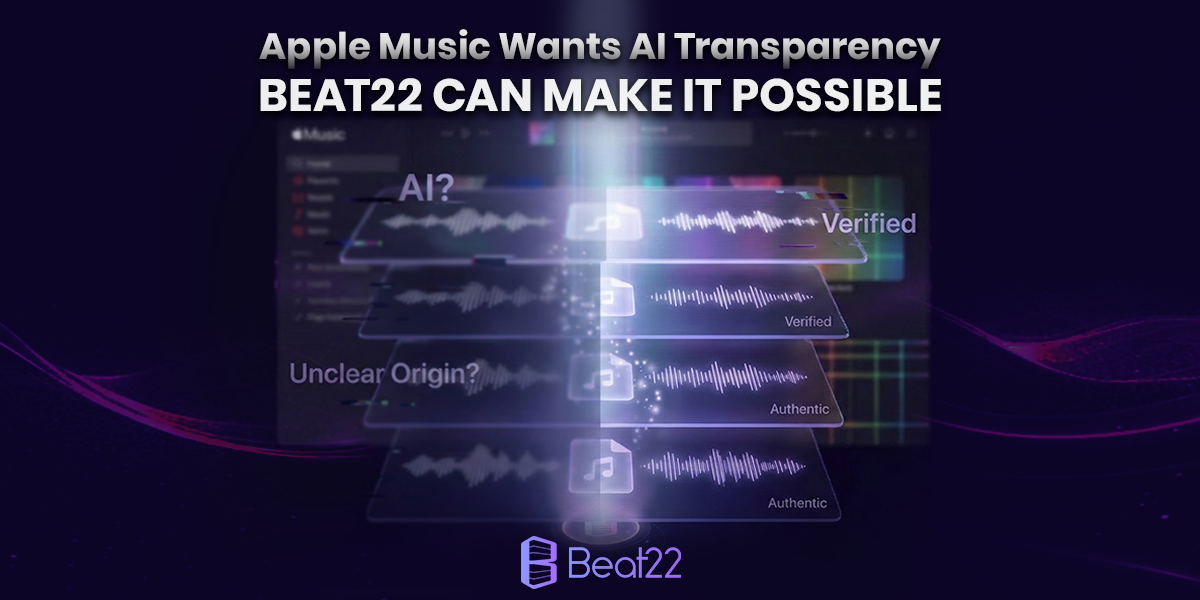
Apple Music has announced a new AI tagging requirement for music delivered to its platform. Record labels and distributors must now disclose whether AI was used in the creation of a song, through what Apple calls “Transparency Tags.”
These tags apply to multiple parts of a release including:
- Track production
- Composition
- Artwork
- Music videos
If a material portion of the content uses AI, the distributor must declare it when delivering the music to Apple Music.
Why This Matters for the Music Industry

This move signals a major shift in the music industry. As AI tools become widely accessible, streaming platforms are now focusing on transparency and authenticity in music creation.
However, streaming platforms usually receive only the final song, and they often do not know where the beat, sounds, loops, or stems originated from. This creates a major gap in verifying how a song was actually produced.
Where Beat22 Can Play a Crucial Role
This is where Beat22 can play a crucial role.
Beat22 operates at the raw music IP layer, where beats, sound kits, loops and other musical building blocks are created and licensed. Because Beat22 sits at the origin of music creation, it can help introduce transparency much earlier in the process.
For example, when producers upload beats or sound kits on Beat22, the platform can capture whether the asset is:
- Fully human-created
- AI-assisted
- AI-generated
This information can become part of the asset metadata from the start.

Enabling AI Transparency from the Source
When a vocalist purchases a beat from Beat22 and creates a song, the AI usage metadata can travel forward with the asset.
This would make it easier for artists, labels and distributors to comply with Apple Music’s AI tagging requirement, because the AI disclosure would already be documented at the creation stage.
The Future of Transparent Music Creation
As the music industry moves toward AI transparency and creator authenticity, platforms that operate at the beginning of the music supply chain will become increasingly important.
By helping track how beats, sounds and music assets are created, Beat22 can serve as an important infrastructure layer for transparent and trustworthy music creation in the AI era.