When a song is created, there are two main rights involved:
- Master Rights – The rights to the actual recording (the audio file you hear).
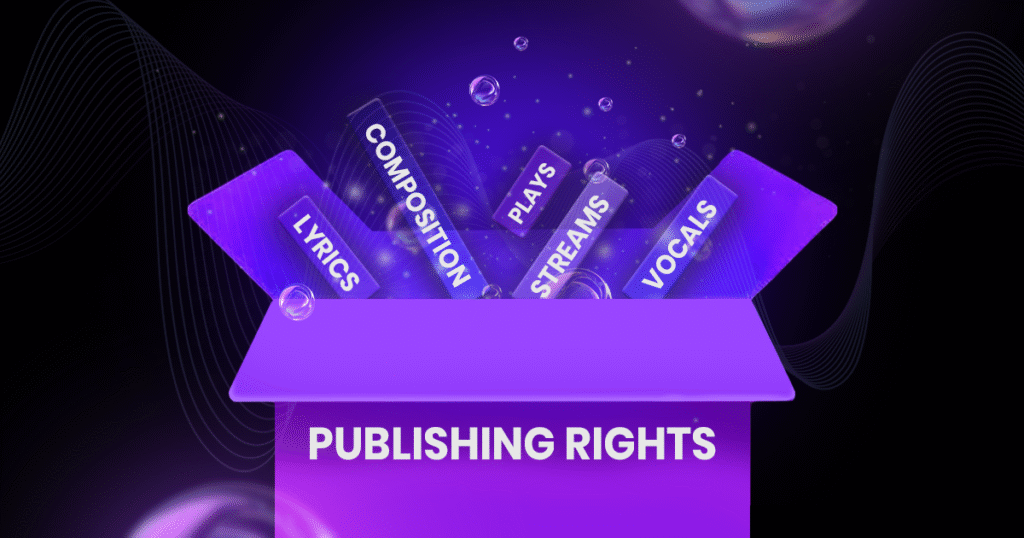
- Publishing Rights – The rights to the lyrics and melody (the songwriting and composition).
Publishing rights belongs to the songwriters and composers — the people who wrote the lyrics and/or composed the tune.
Think of it like this:
- Master Rights = The final movie you see in the theatre.
- Publishing Rights = The script and story that movie was based on.
- The movie (master) can be made in many ways by different directors, but the script (publishing) always belongs to the writer who created it.
Even if 10 different people sing and record the same song, the publishing rights still belong to the original lyricist and composer.
Why Are Publishing Rights Important?
Publishing rights decide who gets paid when your song is:
- Played on the radio
- Streamed on Spotify, Apple Music, YouTube, etc.
- Performed live in concerts or TV shows
- Used in movies, ads, or TV serials
Without publishing rights, you might still have a hit song, but you won’t get royalties from these uses.
Example 1:
“Tum Hi Ho” from Aashiqui 2
- Lyrics & Composition: Mithoon (owns publishing rights)
- Singer: Arijit Singh (owns no publishing rights for the song, only receives singer fees or royalties if agreed)
- Master Rights: T-Series (record label)
If “Tum Hi Ho” is played on TV or used in a movie scene:
- Mithoon gets publishing royalties (because he wrote & composed it).
- T-Series gets master royalties (because they own the recording).
Example 2:
“Apna Bana Le” from Bhediya
- Composer: Sachin–Jigar (publishing rights owners for music)
- Lyricist: Amitabh Bhattacharya (publishing rights owner for lyrics)
- Singer: Arijit Singh (no publishing rights unless he’s also a writer)
- Master Rights: Sony Music
When the song is streamed or licensed:
- Sachin–Jigar + Amitabh Bhattacharya get publishing royalties.
- Sony Music gets master royalties.
How Publishing Royalties Are Split (with Percentages)
Let’s say a song earns ₹1,00,000 in publishing royalties from streaming and radio plays.
The split depends on who contributed to the songwriting and composition:
Example Split:
- Composer (melody creator) – 50% → ₹50,000
- Lyricist (words) – 50% → ₹50,000
If there are two composers and one lyricist, it can be:
- Composer 1 – 25% → ₹25,000
- Composer 2 – 25% → ₹25,000
- Lyricist – 50% → ₹50,000
Summary:
- Publishing rights = Rights to the song’s composition & lyrics.
- They stay with the songwriters and composers, no matter who sings or records the song.
- Owning publishing rights means you earn royalties whenever the song is used.
- Always register your song with a publishing society (like IPRS in India) to collect your royalties.


